




Bridal Radiance
Get a flawless, radiant glow for your big day with our bespoke pre-bridal clinical protocols in just minutes.
Explore Treatment →
Rebuild what acne destroyed.
Acne scars are one of the most complex and frustrating dermatological concerns to treat, and they cannot be adequately addressed with a single procedure. Krisara Skin Clinic uses a scientifically structured, multi-modal scar revision protocol that selects the appropriate combination of treatments based on the specific scar type: subcision for rolling scars, TCA CROSS for ice-pick scars, MNRF for boxcar and rolling scars, Fractional CO2 for overall texture and shallow scars, and exosome therapy for accelerated healing and regeneration. Our typical scar protocol spans 3–6 months and achieves 60–80% improvement in scar depth, texture, and overall appearance.
Medical Disclaimer: The information provided on this page is for educational and informational purposes only. It is not a substitute for professional medical advice, diagnosis, or treatment. Please consult with Dr. Rashmika Reddy before undergoing any treatments or procedures.
Acne scars are fundamentally structural problems — they are areas where the skin's collagen framework was destroyed by inflammation and replaced with disorganised, contracted fibrous tissue. The appearance of the scar (ice-pick, boxcar, rolling) depends on how deeply the inflammation went and what tissue plane it damaged. This is why a single treatment can never adequately treat all scar types: TCA CROSS targets the narrow epithelial tract of an ice-pick scar; subcision severs the fibrous tethers pulling down rolling scars; MNRF remodels the collagen matrix across the entire scar bed; and Fractional CO2 smooths the epidermal surface. At Krisara, Dr. Rashmika performs a detailed dermoscopic scar analysis on the first appointment, classifying each scar by type, depth, and location, and designing a personalised multi-modal protocol. Patients are counselled that scar revision is a process, not an event — it requires multiple sessions over months, with the full result visible only at 6 months when the final collagen remodelling is complete. We target 60–80% improvement as our benchmark, which transforms the appearance significantly and restores patient confidence.
The foundation of scar revision at Krisara. Subcision addresses rolling scars by severing subcutaneous fibrous tethers. TCA CROSS (Chemical Reconstruction of Skin Scars) targets ice-pick scars by focal application of 100% TCA to the scar base, triggering ice-pick wall remodelling. These two procedures target the most structurally distinct scar types and are the first-line interventions before resurfacing.
Equipment Used
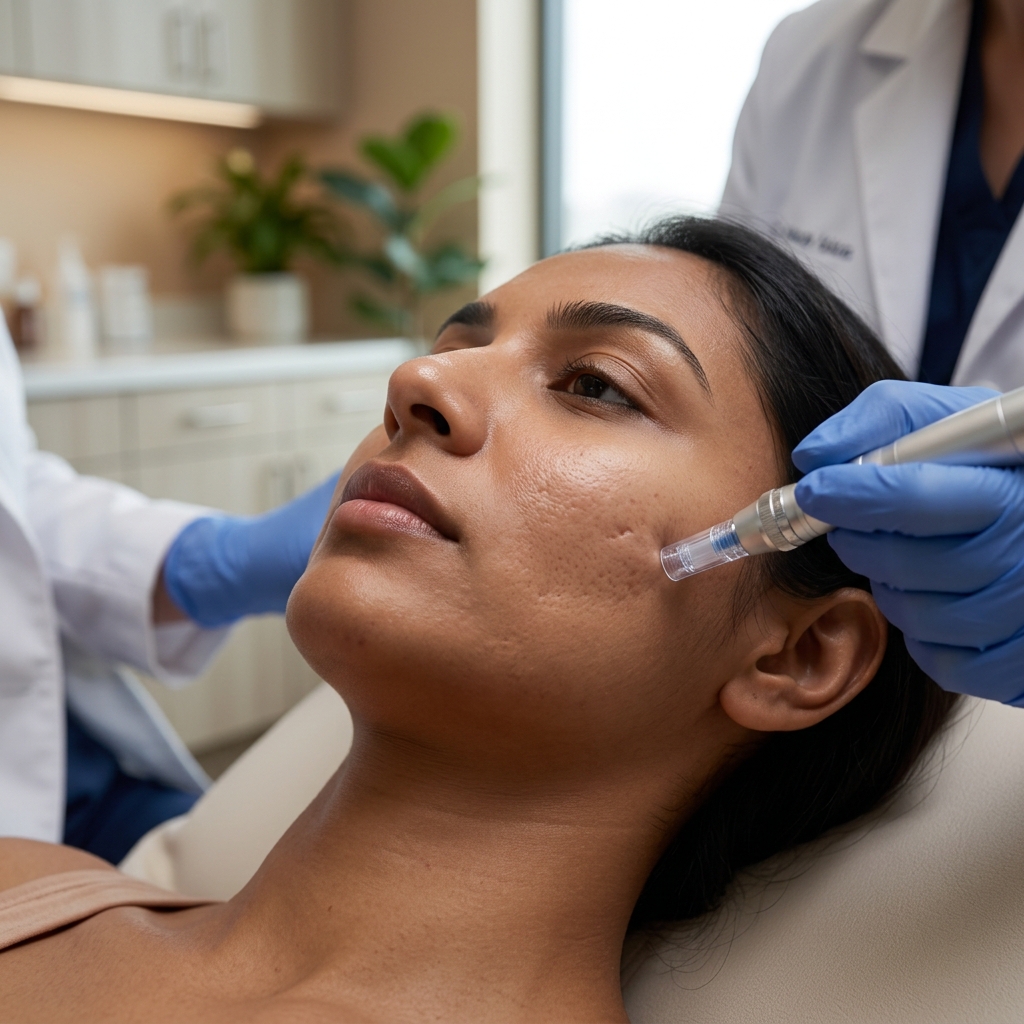
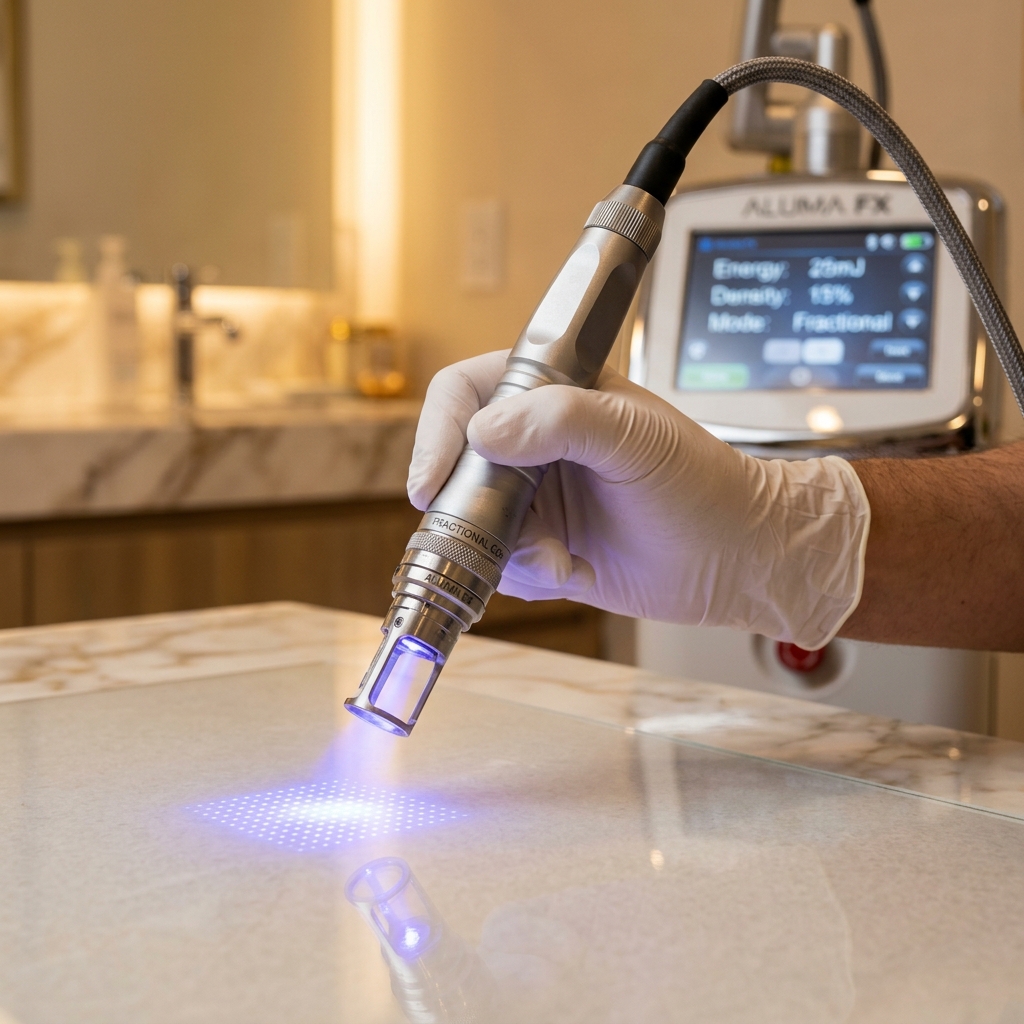
The resurfacing phase of scar revision. MNRF uses radiofrequency microneedling to remodel the collagen matrix across the scar bed. Fractional CO2 provides ablative resurfacing of the epidermis and superficial dermis, smoothing texture and further stimulating collagen. These two modalities work synergistically — MNRF targeting deeper dermis, CO2 targeting epidermal and superficial dermal improvement.
Equipment Used
Exosomes — nano-sized extracellular vesicles secreted by stem cells — are applied topically or injected into the scar bed immediately after MNRF or CO2 laser to accelerate and enhance the collagen remodelling response. They deliver growth factors (TGF-β, VEGF, FGF) and microRNA signals that significantly enhance new collagen quality and reduce fibrotic re-scarring.
Equipment Used
Each treatment within Scar Revision & Texture Reconstruction addresses a specific aspect of the condition. Click any card to see the full clinical detail, machines used, procedure steps, and aftercare.
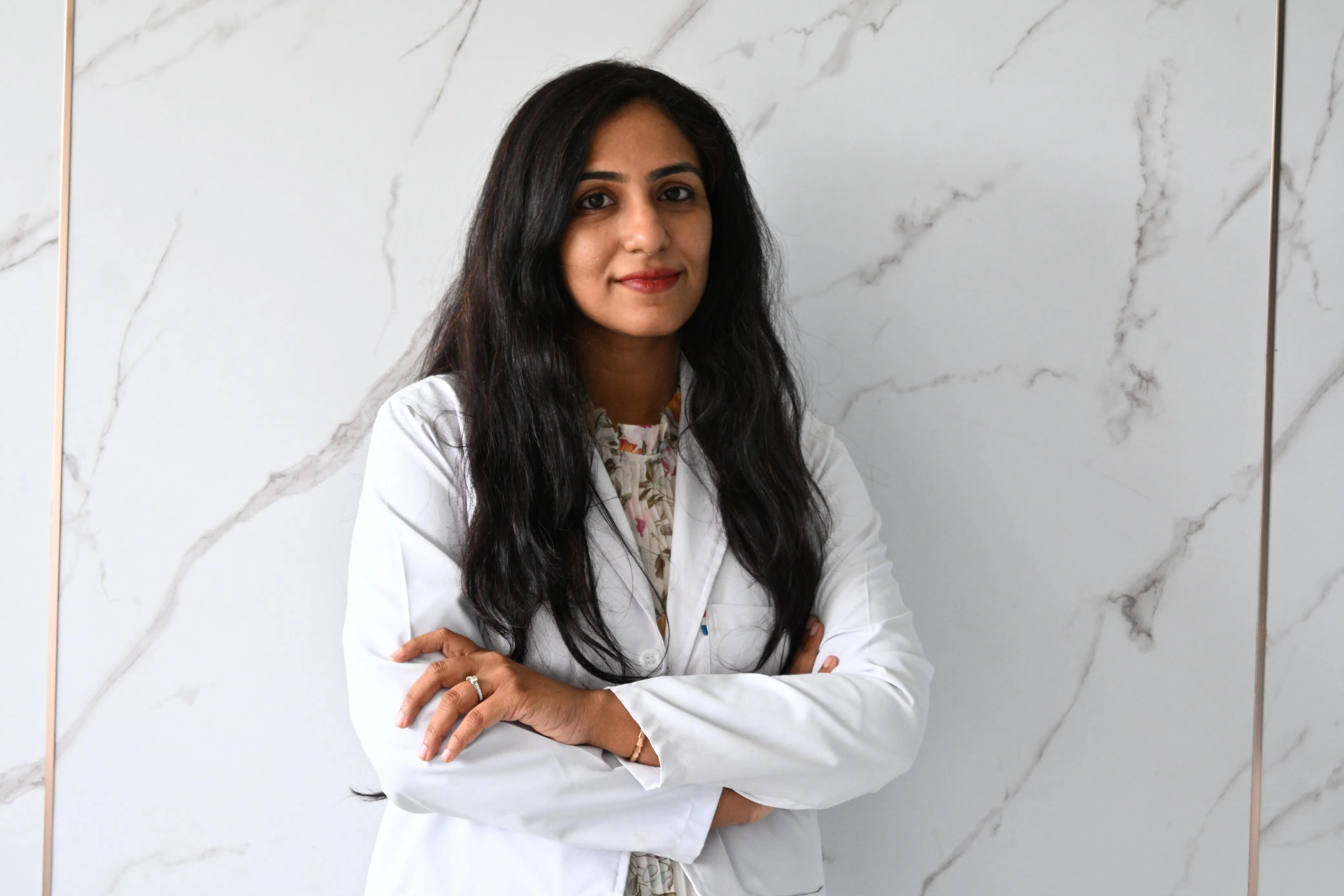
MBBS, MD (DVL) · Consultant Dermatologist, Trichologist & Aesthetic Physician
Dr. Rashmika Reddy is a highly qualified and experienced dermatologist with over 7 years of clinical expertise in diagnosing and managing a wide range of skin, hair, and aesthetic concerns. She is dedicated to providing personalised and evidence-based care, combining advanced machine technology with a deep understanding of Indian skin physiology, hormonal dermatology, and nutritional medicine.
Complete removal of acne scars is not clinically achievable. However, significant improvement — typically 60–80% — is achievable with a structured multi-modal protocol. The improvement in texture, depth, and visibility is often dramatic enough to restore confidence and achieve a near-normal skin appearance in most patients.
The minimum protocol for meaningful scar revision is 3–6 sessions over 3–6 months. This includes subcision and TCA CROSS in the first 1–2 sessions, followed by 3–4 MNRF or Fractional CO2 sessions. Each session builds on the previous one — the collagen remodelling from each session takes 4–6 weeks to fully develop before the next session is performed.
Subcision is a mechanical procedure where a needle breaks the fibrous tethers pulling down rolling scars from beneath. MNRF is an energy-based procedure that uses radiofrequency microneedling to stimulate global collagen remodelling across the entire scar bed. They treat different aspects of scar pathology and are most effective when used in combination.
TCA CROSS involves application of highly concentrated TCA (100%) inside each ice-pick scar with a fine applicator. The initial application causes a brief sharp stinging that settles within 30 seconds. A white frost appears in the scar (indicating coagulation of proteins within the scar tract). The procedure is performed with topical numbing and most patients tolerate it well.
It is preferable to bring active acne to at least 80% clearance before starting aggressive scar revision procedures. Active acne during scar treatment creates a cycle of ongoing scarring that undermines revision results. At Krisara, we typically run concurrent acne clearance treatment for 2–3 months before initiating the scar protocol.
Every protocol at Krisara begins with a thorough diagnostic consultation — not a treatment menu. Book your appointment with Dr. Rashmika Reddy today.
Mon–Sat · 10:30 AM – 8:00 PM · Kompally, Hyderabad